 Download Our Catalogue
Why a Multi-Chain Browser Wallet Changes How You Think About DeFi Security
Whoa! This felt overdue. For years I kept juggling extensions, accounts, and networks—untangling gas tokens like a bad wire mess. My gut said there had to be a cleaner way, something that didn’t make me feel like I was one click away from disaster. After using several wallets and getting burned a couple times (yeah, facepalm), I started treating browser wallets like safety gear instead of convenience tools.
Short version: multi-chain support matters. Medium version: it matters a lot for both usability and security. Longer version: when you routinely interact with Ethereum mainnet, layer-2s, and a half-dozen EVM-compatible chains, a wallet that pretends every network is an afterthought will cost you time and money, and then some—because sloppy UX leads to sloppy security, and sloppy security leads to losses. Here’s what I’ve learned the hard way, and what you can do about it.
First, some context. I live on the East Coast and spend a lot of time between NYC meetups and remote coffees in Brooklyn. I’m biased toward products that respect time and mental overhead. Wallets that force you to duplicate assets across networks or constantly switch RPCs? They bug me. Seriously. They feel like manual labor for something digital. Initially I thought that more chains simply meant more complexity—end of story. But actually, the right wallet can turn that complexity into leverage: you can move assets, isolate risk, and maintain privacy without rewriting your mental checklist every time.
Here’s the thing. Multi-chain isn’t just about adding a dropdown for networks. It’s about reducing friction in places where users make mistakes. Shortcuts matter. Confirmation flows matter. Identifiers for accounts and contracts matter. When a wallet shows you clearly which chain a dApp is asking to access and what permissions it’s requesting, that little clarity prevents a lot of “oops.” On the flip side, if the wallet buries that info, you’re essentially training people to accept prompts blindly.
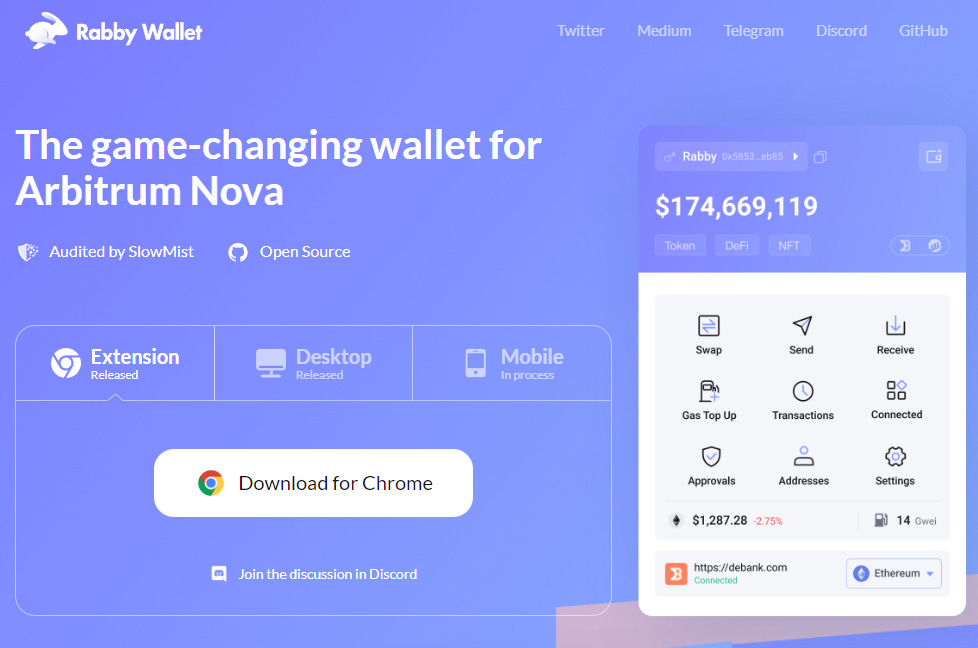
How a multi-chain extension can harden your DeFi posture — and where rabby wallet fits
Okay, so check this out—I’ve been testing browser extensions that focus on multi-chain workflows, and one that stood out for me was rabby wallet. My first impression was: clean UI, sensible defaults. My instinct said “lightweight,” though actually it’s surprisingly feature-rich under the hood. It makes network context explicit, and it offers transaction insight that prevents a lot of accidental approvals. If you’re moving between BSC, Polygon, Optimism, Arbitrum and more, that context saves you stress—and money.
Let me walk through concrete security vectors where a good multi-chain wallet changes outcomes. Short list first: phishing, approval overload, chain mismatches, nonce/replace-by-fee confusion, and contract call ambiguity. Now, a bit more detail. Phishing often relies on tricking users into signing messages or approving contracts that look legitimate. Medium-size friction—like a clear origin, chain badge, and explicit list of requested approvals—stops a surprising number of scams cold. Longer thought: phishing isn’t just about fake sites; it’s also about fatigue. When users get tired of reading tiny prompts, the adversary wins. So a wallet that reduces fatigue by presenting crucial info cleanly actually reduces attack surface in a measurable way.
Approvals are the silent killer. Approving unlimited allowance for tokens is like handing someone a blank check. Some wallets make it tedious to set custom allowances, so people click “infinite” because it’s easier. That’s a behavioral issue wrapped in UX laziness. A smart wallet nudges users to set specific allowances, shows token spend history, and optionally revokes allowances from a dashboard. That combination of nudges and visibility reduces long-term exposure—because fewer lingering approvals equals fewer ways for a compromised dApp to drain funds.
Chain mismatch is another common pitfall. Picture this: you’re on a dApp that supports multiple chains and you think you’re operating on Polygon, but your wallet is set to Ethereum mainnet. Big oops. Transactions will fail or worse, they could result in funds being stuck. The wallet should present the requested chain in bold, and block or warn when the active chain doesn’t match. Rabby, in my experience, does a decent job making that mismatch obvious instead of subtle. On one hand it’s a small UI tweak, but on the other hand it eliminates an entire class of human error.
Nonce and replace-by-fee stuff is nerdy, but it matters when gas spikes. If a wallet hides the transaction parameters or auto-bumps fees without telling you, you lose control. I prefer explicit control with smart defaults—let the wallet suggest, but let me override. This is where a browser extension that has a developer-friendly UX shines, because advanced users can save themselves from costly retries while less technical folks get safe presets.
Also, transaction intent. When a dApp asks you to call a contract, the payload can be opaque. A helpful wallet parses the call and shows high-level intent: “Transfer 2,000 USDC to contract X” versus generic hex. That translation isn’t perfect, but it’s very useful. It acts like a translator between blockchain-speak and human-speak. Translation reduces mistakes—again, small UI, big impact.
Now, some realities. No wallet is bulletproof. I’m not 100% sure any extension can defend against a fully compromised machine or a user who willingly signs malicious payloads. On one hand you can have layered protections, though actually the human factor remains the gating variable. I once had a friend who dismissed warnings—kept approving things—and lost funds despite every protective feature turned on. People will be people. So the goal is to make the safe choice also the easy choice, and the dangerous option require a deliberate extra step.
Operational advice for power users and teams. Short checklist: compartmentalize funds, use different accounts for trading vs. storing, grant minimal allowances, and audit active approvals monthly. Medium tip: keep one account for high-frequency interactions and another as a cold-store account that only signs rare withdrawals. Longer thought: treat browser extensions like tools in a workshop. You wouldn’t use the same drawer for sharp blades and fragile glass. Separate tools by risk and access level. That organizational mindset goes a long way in reducing both accidental loss and targeted attacks.
Integration with hardware wallets deserves a shoutout. If your extension supports hardware account pairing, use it. Even a basic setup where you connect a hardware wallet for large withdrawals but use a software account for routine swaps improves security dramatically. The UX friction is worth it. Yes, it’s slightly annoying to plug in a device sometimes—somethin’ to do with patience and discipline—but it’s also how you avoid playing whack-a-mole with hacks.
A quick real-world episode: I once interacted with a liquidity farm that had a permission-swap flow that looked normal. My instinct flagged the contract address, so I paused. Initially I thought it was fine, but then I noticed the allowance requested was orders of magnitude larger. Actually, wait—let me rephrase that: I almost signed a dangerous approval. The wallet’s parsing helped me see the mismatch in plain English, and I canceled. That cancellation saved me money. Tiny victory. Small details add up.
Okay, counterpoints. If a wallet is too chatty—asking permission for trivial things or demanding confirmations for every tiny read call—users will either rage-quit or override prompts mindlessly. Balance is key. A good extension offers a tiered approach: safe defaults for most users, and opt-in verbosity for those who want granular control. Also, continuous updates matter. Chains evolve, contracts change, and new UX patterns emerge. A stagnant wallet gets rusty fast. Keep an eye on release notes and prefer teams that respond to security issues quickly.
For builders: build safety into the navigation. Emphasize clear affordances for chain, account, and approvals. Employ readable language, not legalese. Use color and icons sparingly and meaningfully—green for go, red for stop, but don’t overuse them. Test your flows with non-technical folks; they’ll reveal the real friction. If you can make a grandma understand why she shouldn’t approve infinite token allowances, you’re doing something right. (No offense to grandmas; my own is great with spreadsheets.)
Common questions from folks switching to multi-chain wallets
Is a multi-chain wallet less secure than single-chain wallets?
Not inherently. The risk comes from implementation and UX. Good multi-chain wallets centralize context and reduce human error, which can make them safer in practice. The key is transparency: show chain context, parse contract calls, and provide easy controls for allowances.
Should I use hardware with my browser extension?
Yes, when possible. Pairing a hardware wallet for high-value transactions adds a strong layer of protection. Use software accounts for low-risk interactions, and isolate your big holdings on devices that require physical confirmation.
How often should I review my token approvals?
Monthly is a good cadence. If you’re an active trader, check weekly. Revoke old allowances proactively—it’s a small chore that prevents a large headache later.
Final thought: switching to a thoughtful multi-chain browser wallet is like upgrading from a flip phone to a smartphone in terms of capability—and like any powerful tool, it demands smarter habits. I’m optimistic. The UX and security tradeoffs are finally trending the right way. Try different setups. Be curious, cautious, and a little paranoid—it’s healthy in DeFi. And yeah, somethin’ about a tidy wallet just makes me feel calmer when gas spikes hit. Who knew?